Unconscious Bias

Instructor
admin
0
0 reviews
  • Description
  • Course
  • FAQ
  • Notice
  • Reviews
Unconscious Bias5

This learning module discusses Unconscious bias in the workplace and how to address it.

Unconscious bias in the workplace refers to the attitudes or stereotypes that shape our understanding of others, and our actions and decisions. These biases are often influenced by our upbringing, education, and experiences, and they can shape how we perceive and interact with others. The attitudes or stereotypes shape our understanding, actions and decisions in an unconscious manner. These biases can have a significant impact on the workplace, leading to discrimination and exclusion, which can create a hostile work environment and perpetuate inequality and disadvantage.

In order to tackle unconscious prejudice, organizations must roll out diversity and inclusion programs and make sure to adhere to practices and policies that combat its detrimental outcomes. This action not only establishes a more just and unbiased work environment, but it also heightens creativity, increases decision-making capabilities, and boosts productivity.

Key Themes

There are several key themes you need to know about unconscious bias in the workplace:

  1. Definition of Unconscious Bias: It is important to define what unconscious bias is and how it can impact decision-making and workplace interactions, including hiring, promotions, and evaluations.
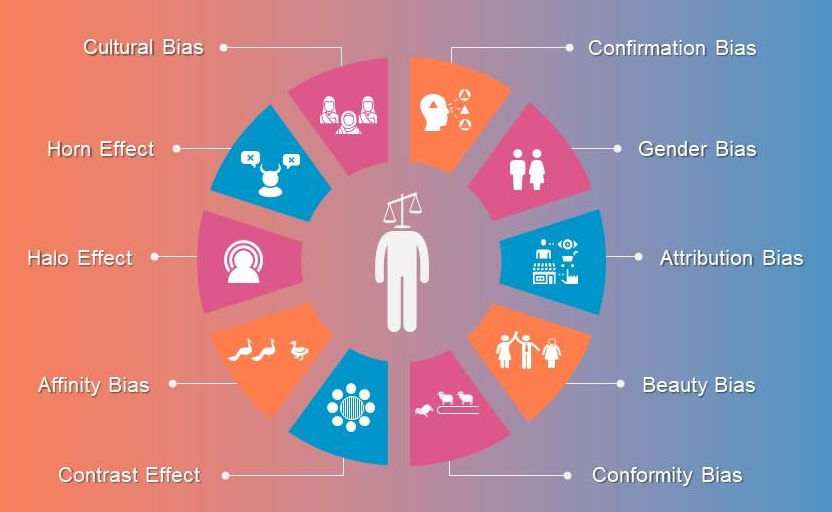
  2. Awareness and Recognition: Employees should be educated on the different types of unconscious biases and how they can manifest in the workplace, and should be trained to recognize their own biases and those of others.
  3. Mitigation and Prevention: Employers should take proactive steps to mitigate the impact of unconscious bias, including implementing blind screening processes, establishing clear criteria for hiring and promotions, and providing bias training to employees.
  4. Inclusive Workplace Culture: Employers should work to establish a workplace culture that values diversity and inclusivity, and actively seeks out diverse perspectives and experiences.
  5. Accountability: Employers should hold individuals accountable for their behaviour and decisions, and ensure that they are based on objective criteria and not influenced by unconscious biases.
  6. Continuous Improvement: Employers should regularly assess and evaluate their policies and practices for potential biases, and make adjustments as needed to promote a fair and inclusive workplace for all employees.

Target audience – Who should do this course?

  • Employees – all employees including managers and contractors
  • Business Owners
  • The public at large – citizens and general members of the public
Learning Objectives
How long do I have to complete the course?
Although you should aim to complete the module in hour, you do not have to complete a module in one sitting. You can pause a module and complete it at any stage.
Do I get a Certificate of Completion?
Upon successful completion of the course and assessment, participants, will earn a certificate. Please note: this certificate is sorely to confirm that you completed the module and is not accredited.
What time of the day can I complete the course?
Participants can begin the course and complete it any time of the day, 24/7.
Do you offer technical support/help?
For technical support, participants should raise a support ticket and explain the problem they are encountering. We respond within 24 hours.
Can I provide feedback?
Participants will be requested to complete an exit interview and comment on their experience of the course.
Can I discuss what I'm learning with my fellow learners and with the course coordinator?
Participants can post queries in the forum during the duration of your enrolment, this on the provision that whatever participants discuss in the forum is on topic.
Access to course - Can I redo the module?
Participants details will remain on the system for 12 calendar months and will be purged after that.

Changes are inevitable and there are instances when updates are essential. When laws and regulations are changed or introduced, we will strive to update the content and issue an announcement here